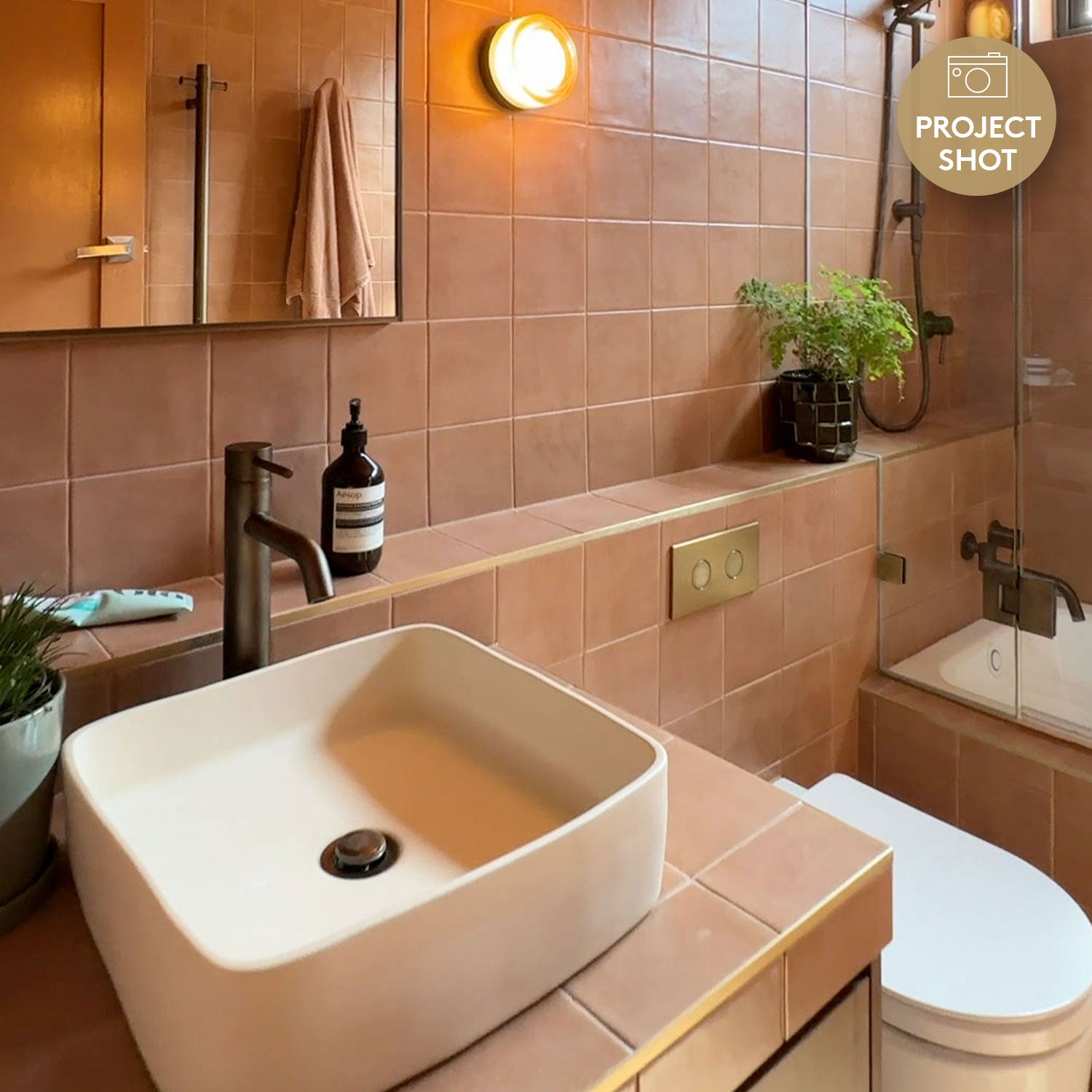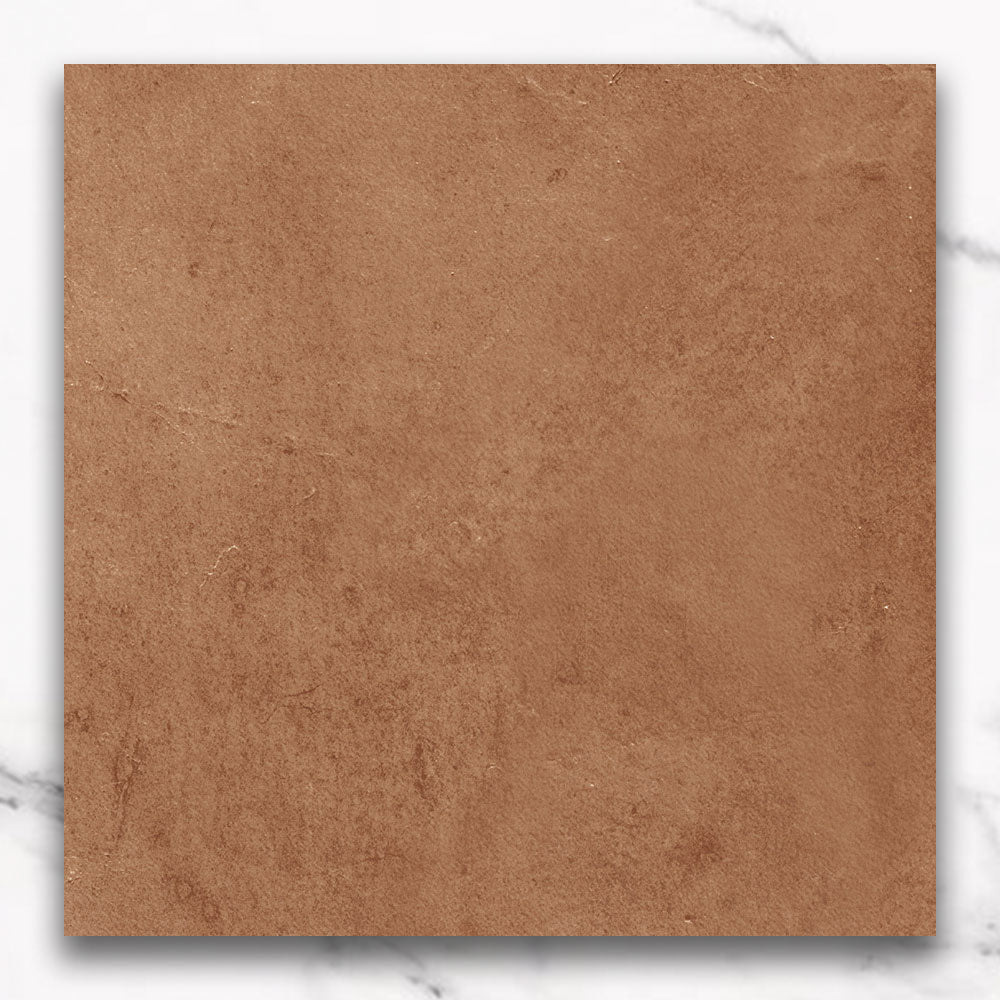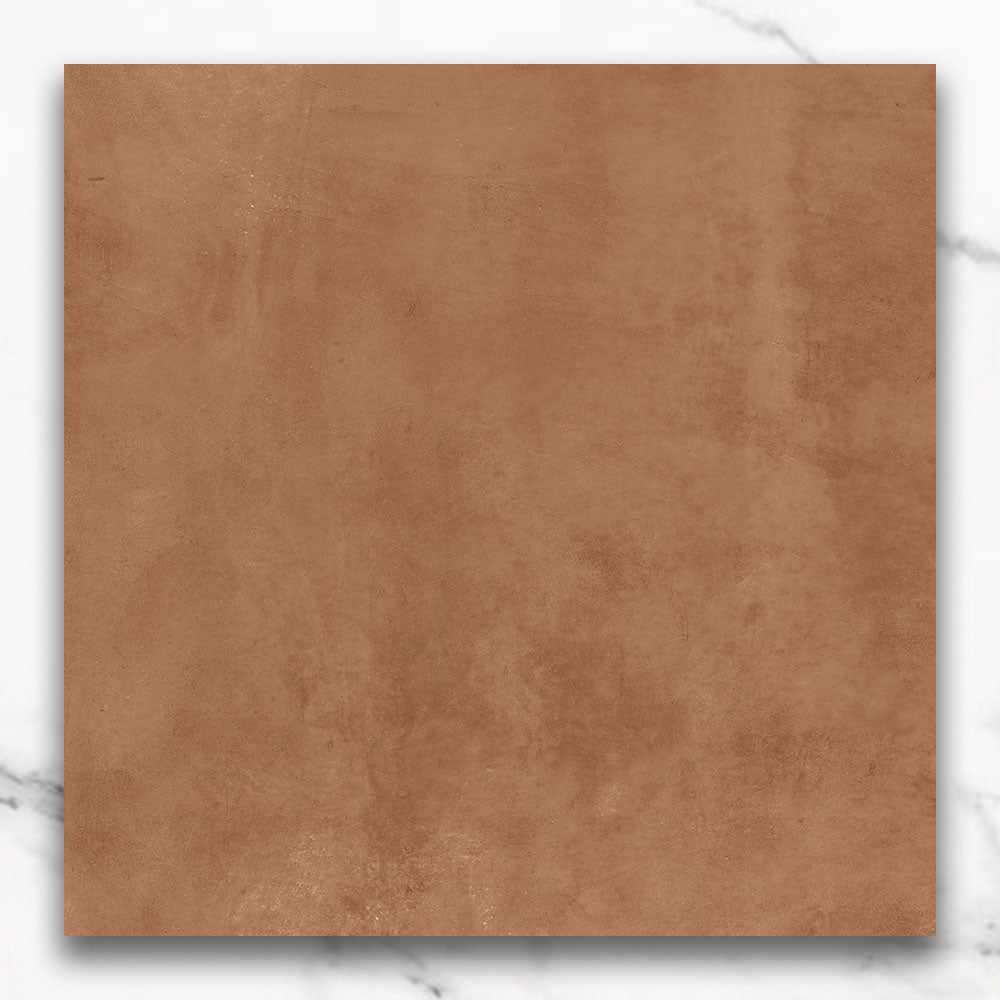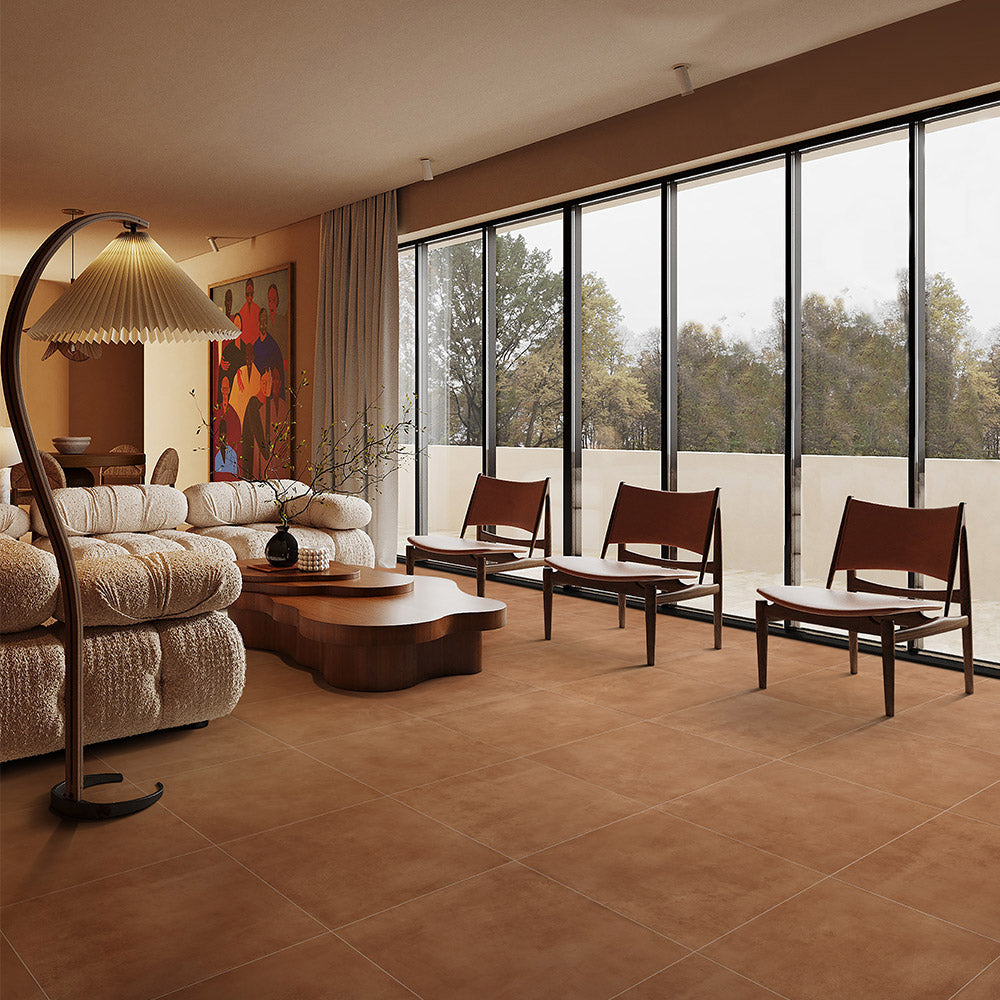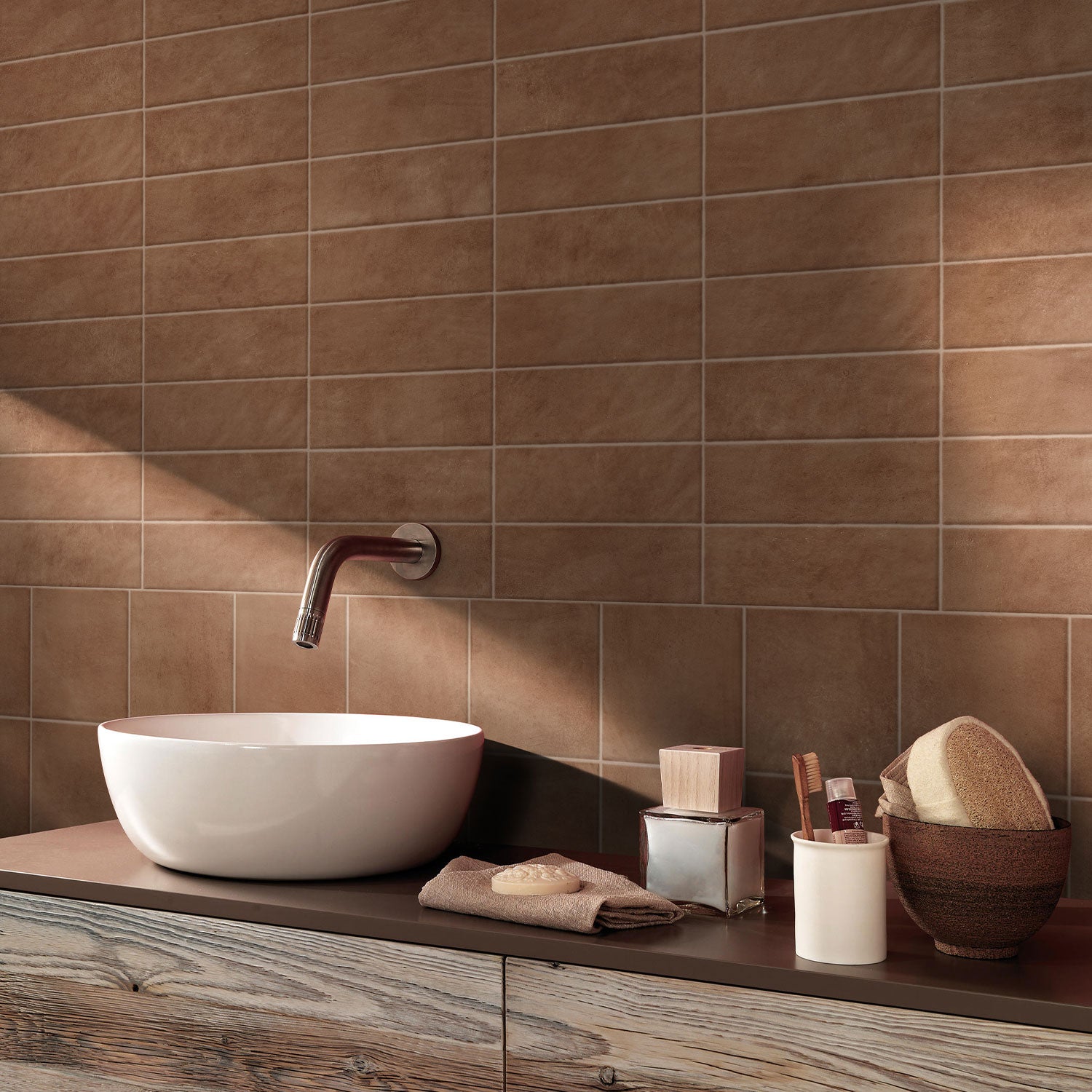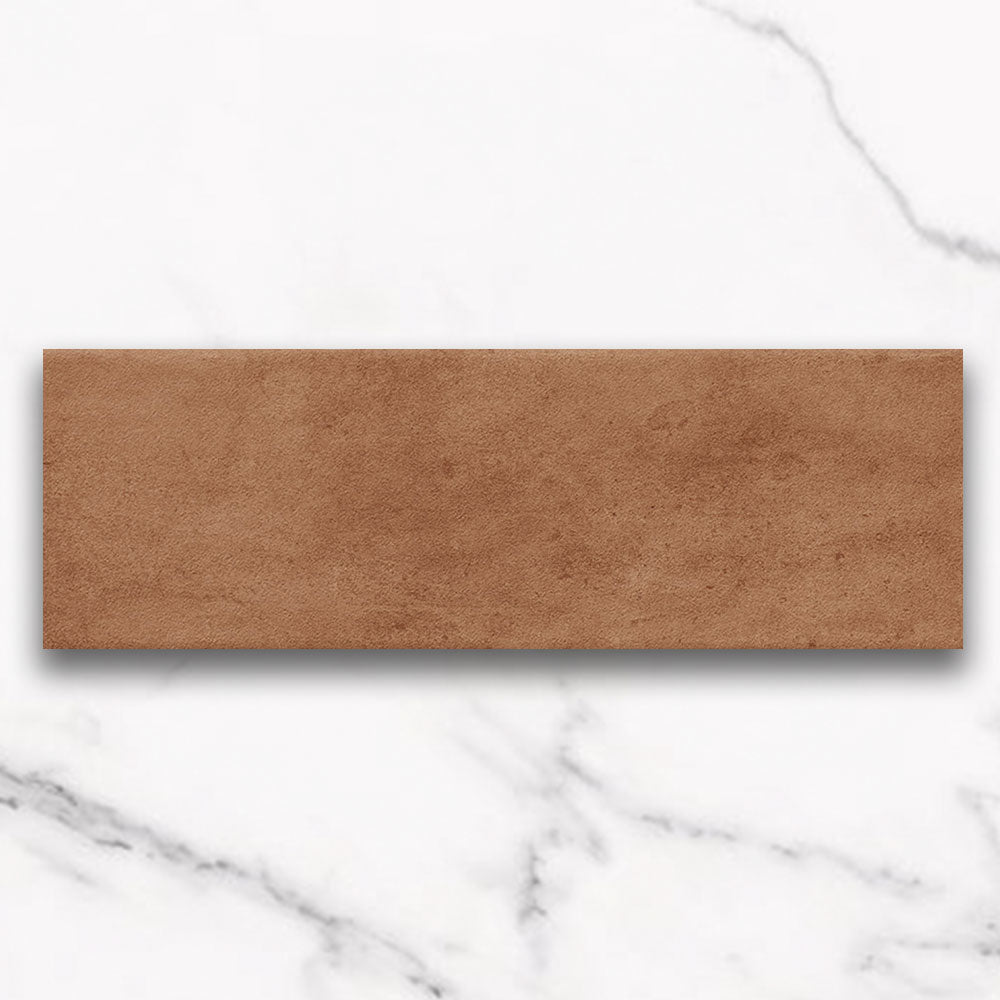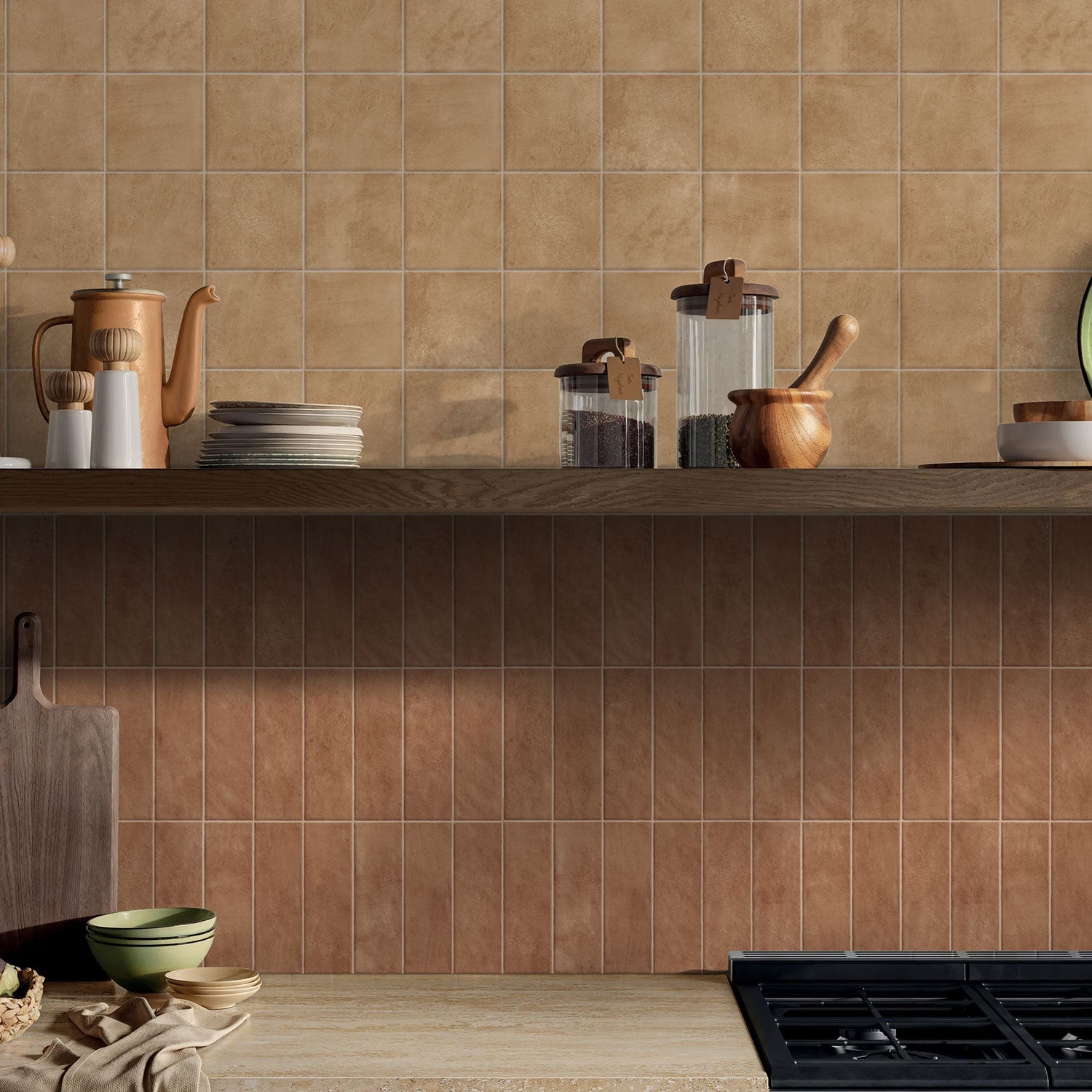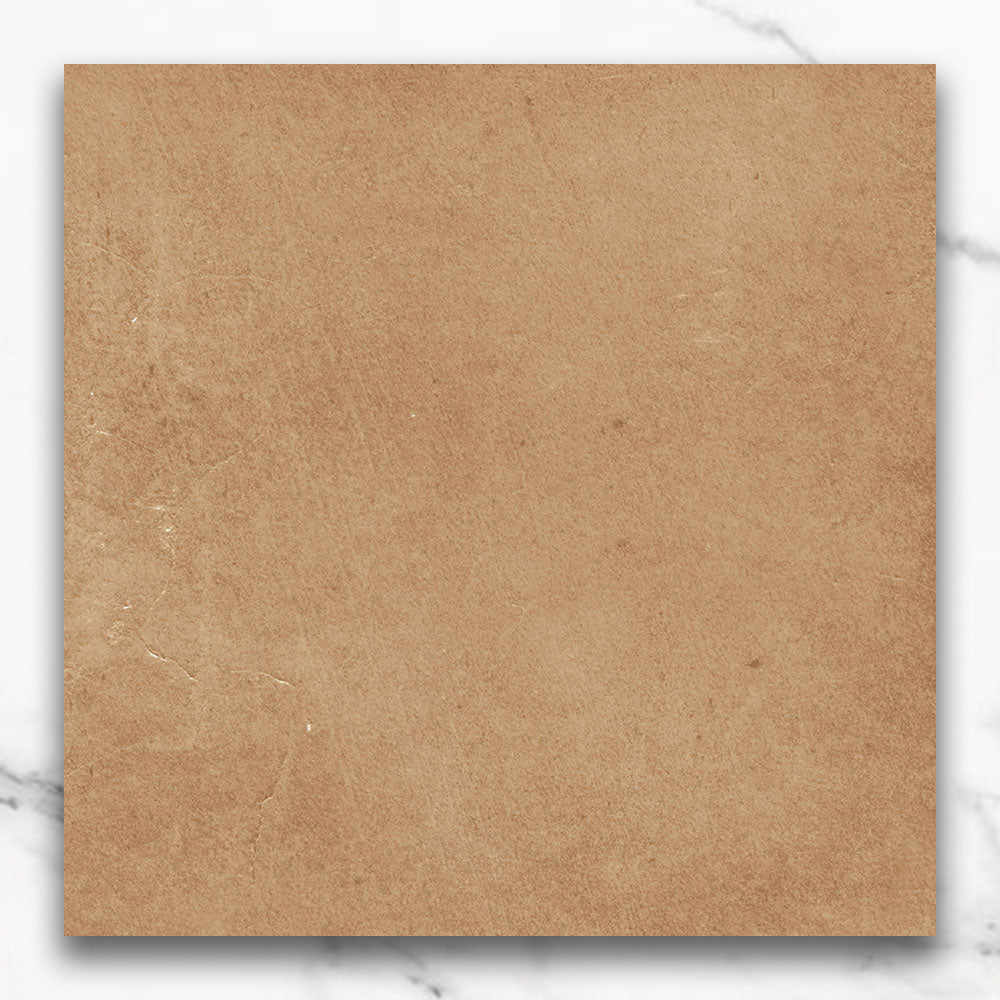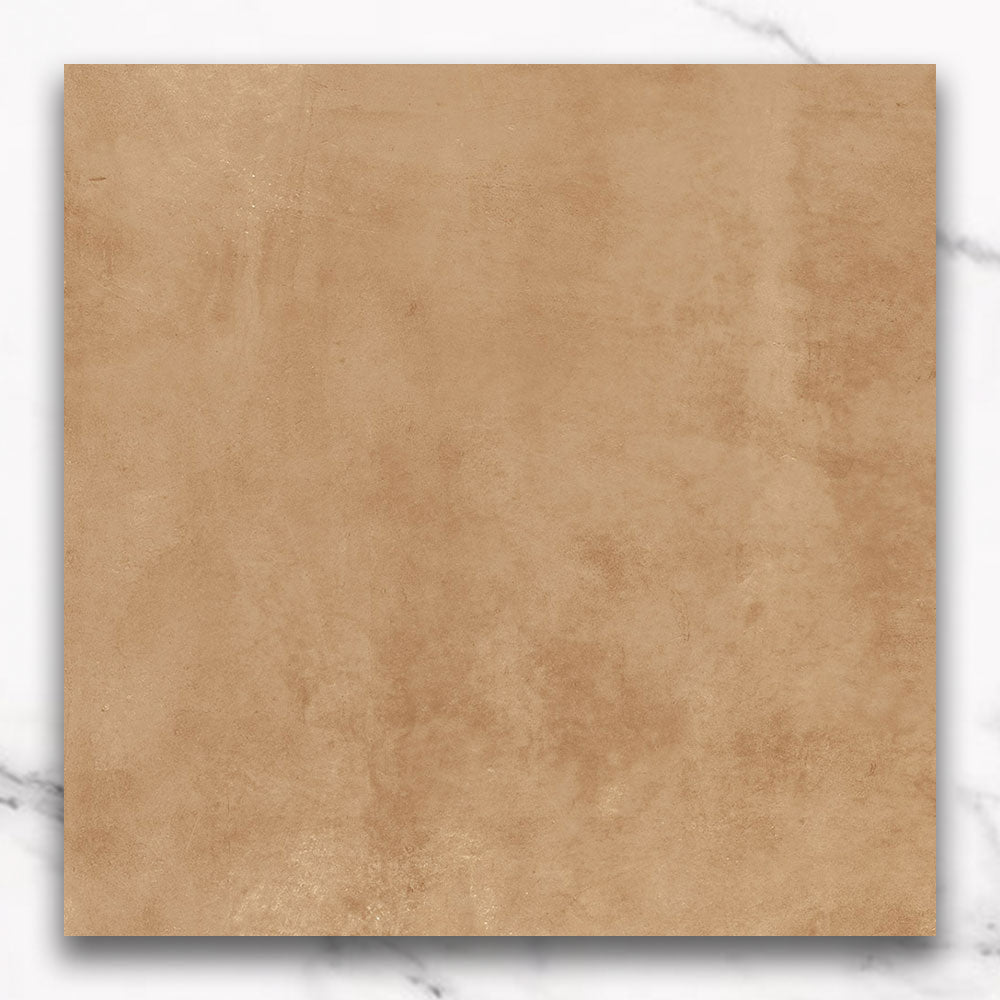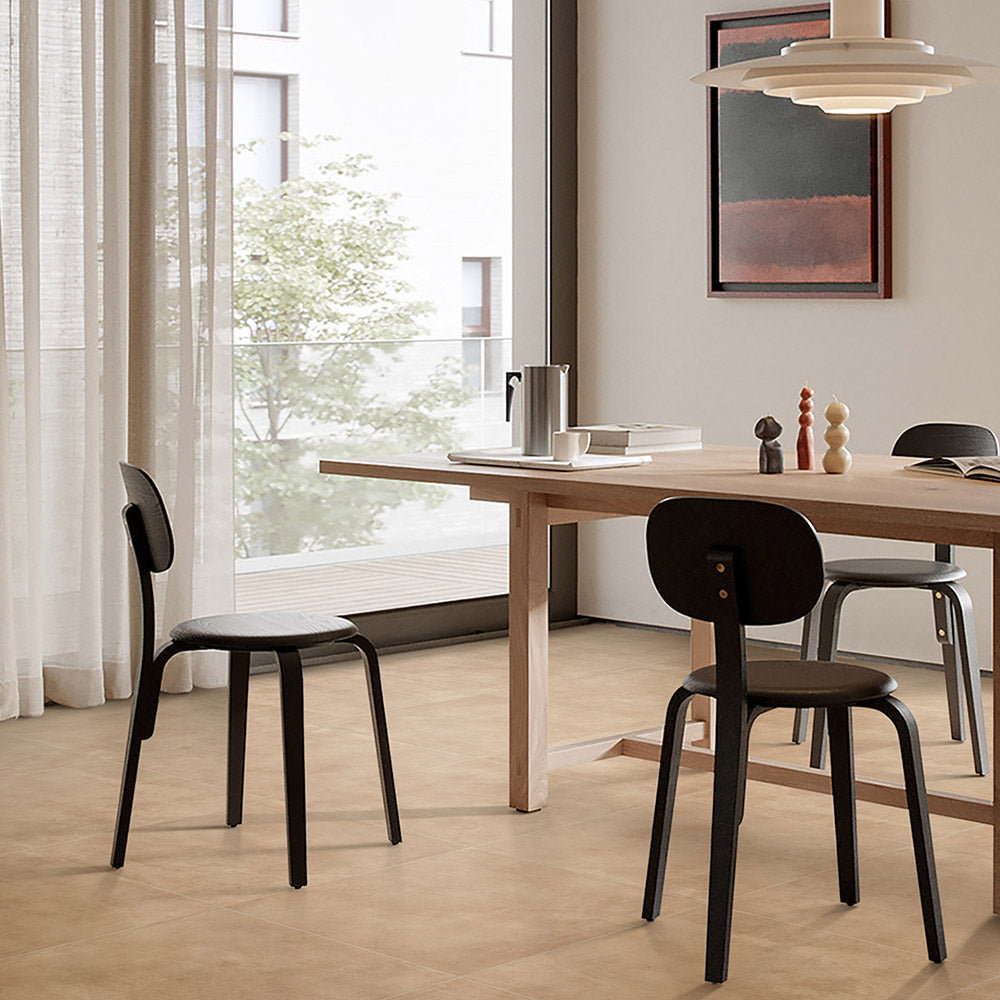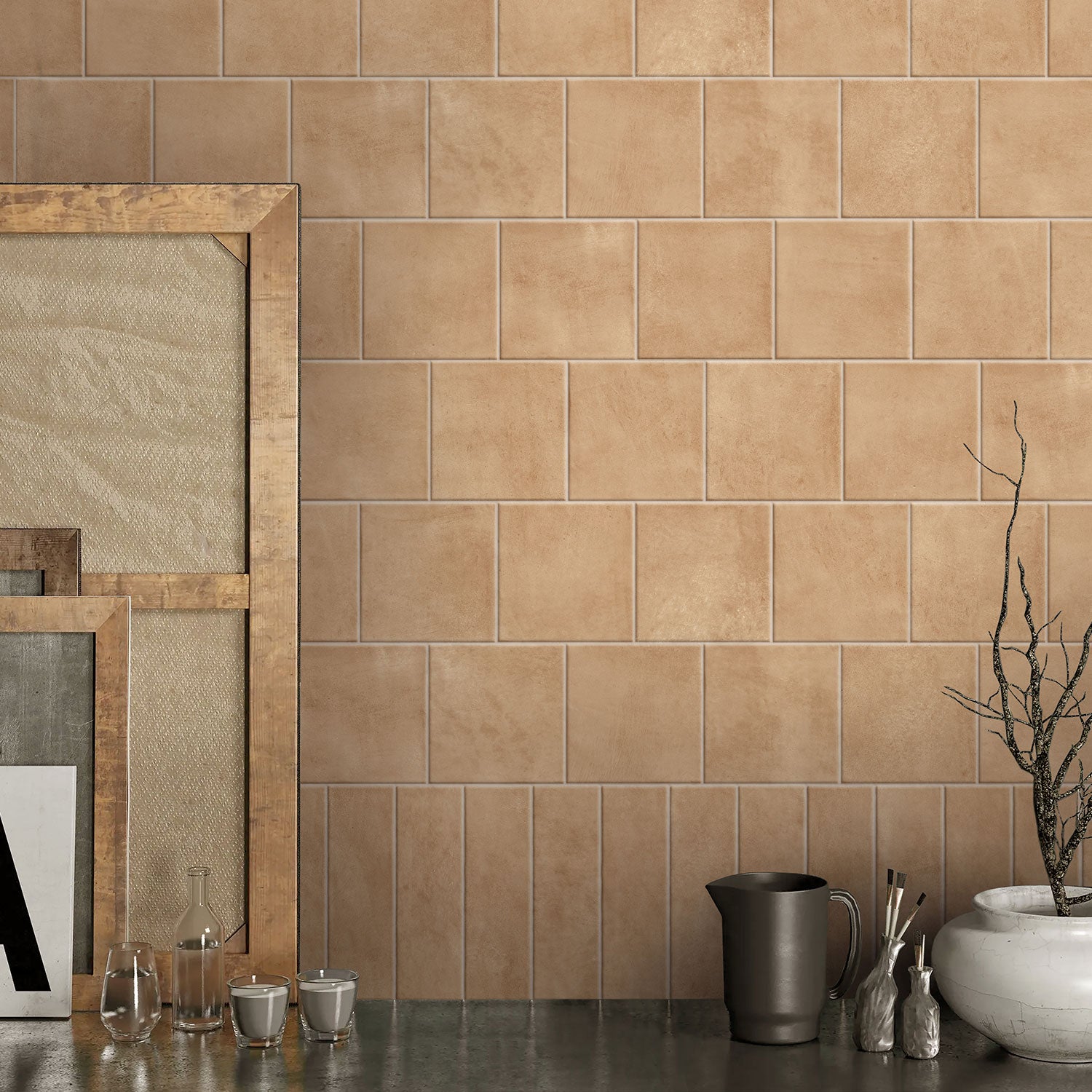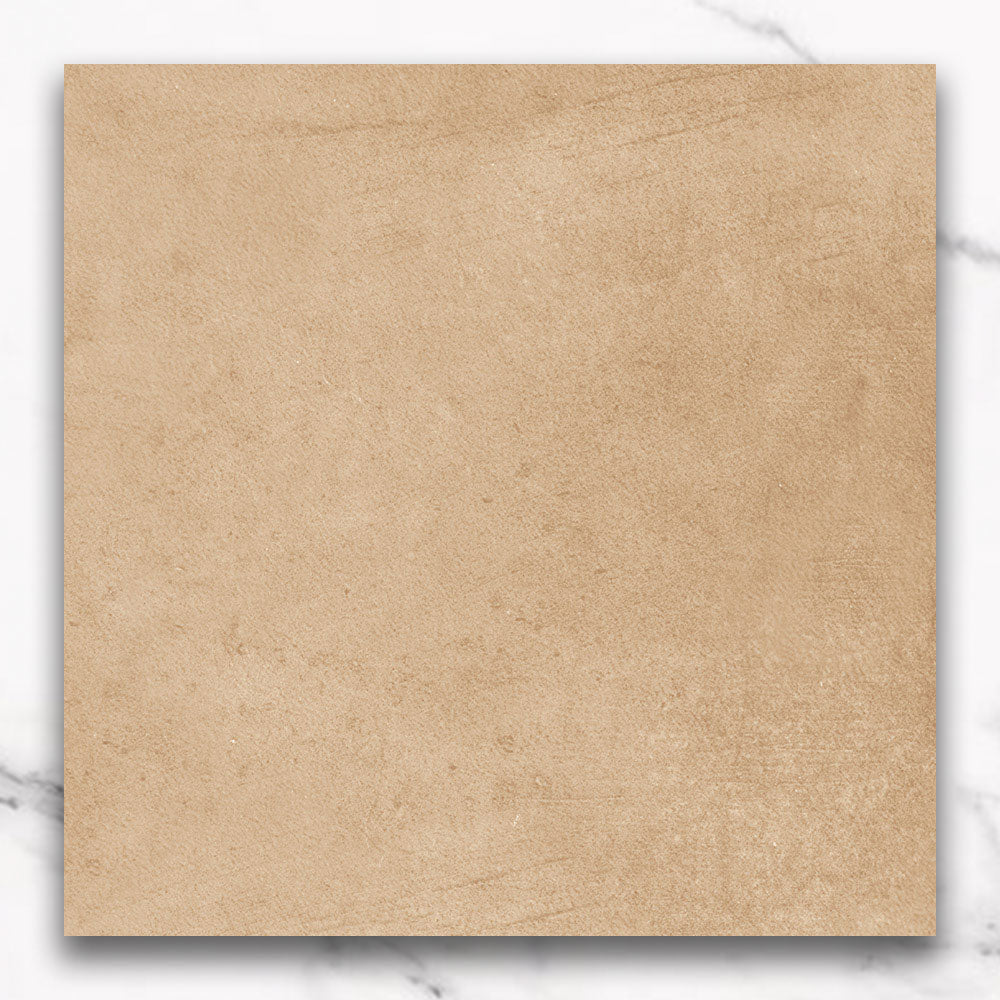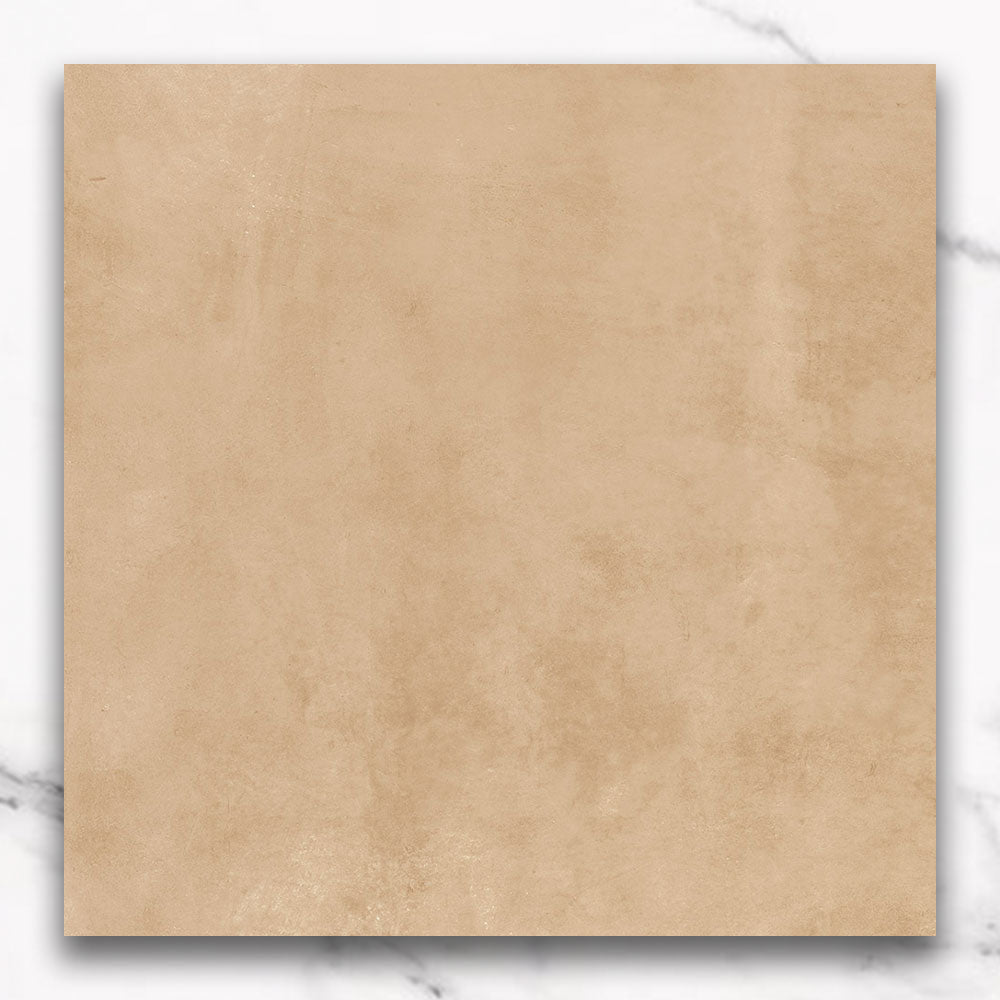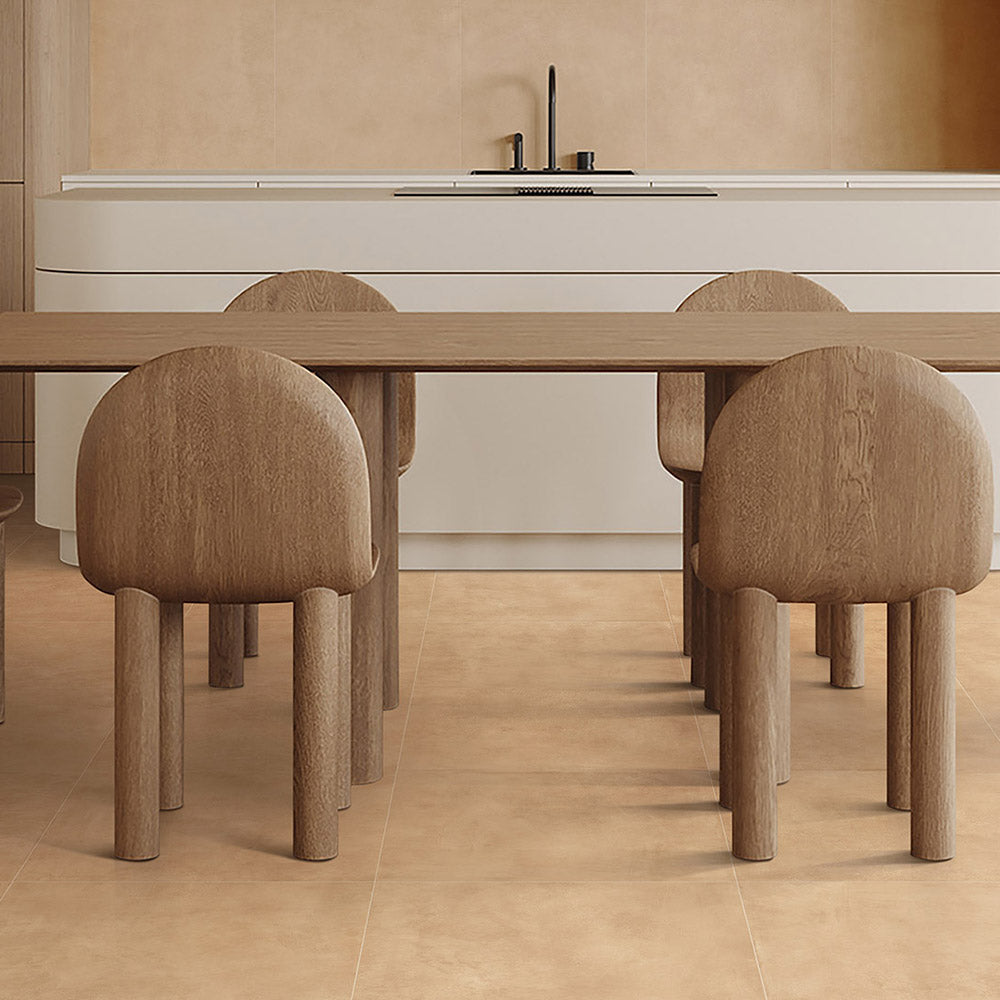

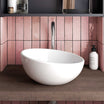
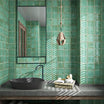
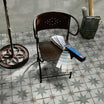
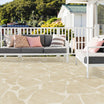

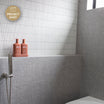
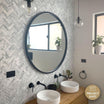

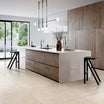
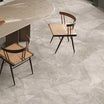

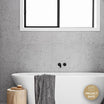
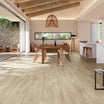

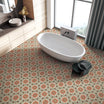

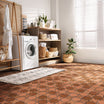

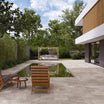
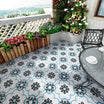
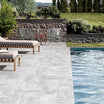



























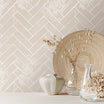

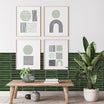



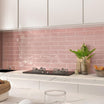
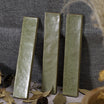
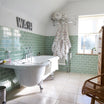
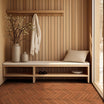
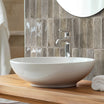
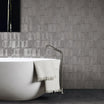
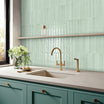
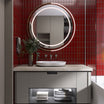


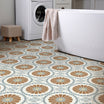
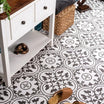
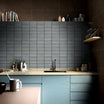
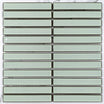
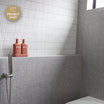

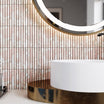


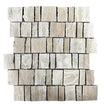
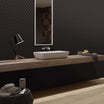

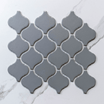
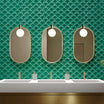
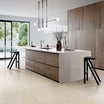

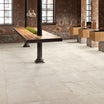

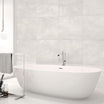
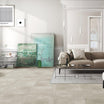
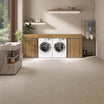
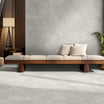
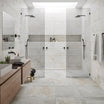
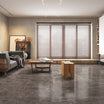
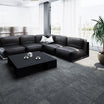

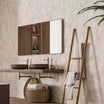


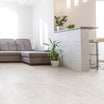
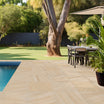

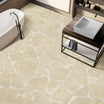
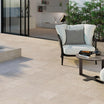


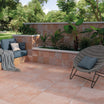
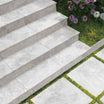
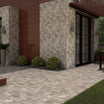


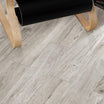
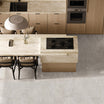

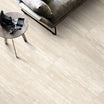
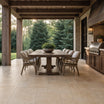
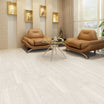
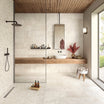

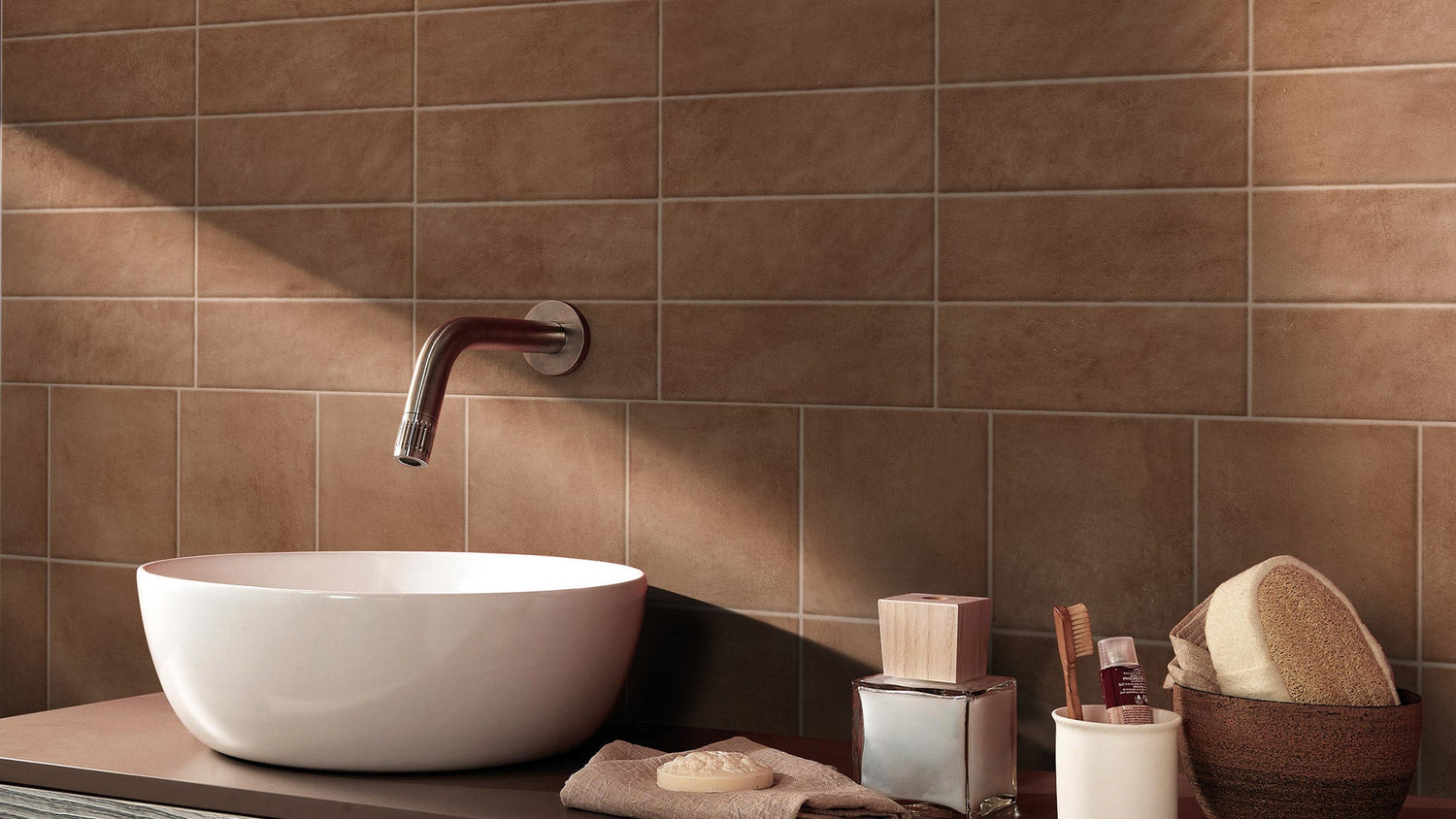
Tuscan is our modern take on traditional terracotta with warm, earthy tones and rich texture of the real thing, in a porcelain body that's tougher, easier to care. It comes in four colours (Clay, Earth, Ochre and Sand) and four sizes, and it's suited to both indoor and outdoor use.
The four sizes are not simply the same tile scaled up and down. They differ in two ways that change how the finished floor or wall looks: the edge profile and the surface finish. That in turn dictates how wide your grout joints need to be which can be a big visual decision.
Here's what to know before you order.
The two edge types
Rectified edge — 300x300 and 600x600

A rectified tile has been mechanically cut and ground after firing so every piece is exactly the same size, with a crisp, square, perfectly straight edge.
Because the tiles are dimensionally consistent, your tiler doesn't need a wide joint to absorb size variation. You can go as tight as a 1.5mm grout joint. The result is a near-seamless surface where the terracotta tone reads as one continuous field rather than a grid of individual pieces.
These two sizes also have a more matt surface — a flatter, drier, more authentically "unglazed terracotta" look — and carry a P5 slip rating, the highest on the wet pendulum scale.
Cushion edge — 150x150 and 75x230

A cushion edge (sometimes called a pressed or non-rectified edge) has a soft, slightly rounded profile straight off the press. It's the traditional look with gently pillowed edge you see on handmade and heritage tiles, and it's a big part of why these two sizes feel more rustic.
The trade-off is dimensional tolerance. Pressed tiles vary very slightly from piece to piece, and the rounded edge means the joint needs room to sit properly. These sizes require a minimum 3mm grout joint. Trying to force them tighter will telegraph every small variation and leave you with wandering grout lines.
These sizes also have a sheen surface rather than a full matt, which catches the light the way glazed terracotta does, and carry a P4 slip rating.
At a glance
| 600x600 | 300x300 | 150x150 | 75x230 | |
|---|---|---|---|---|
| Edge | Rectified | Rectified | Cushion | Cushion |
| Minimum grout joint | 1.5mm | 1.5mm | 3mm | 3mm |
| Finish | Matt | Matt | Matt with sheen | Matt with sheen |
| Slip rating | P5 | P5 | P4 | P4 |
| Thickness | 9.2mm | 9.2mm | 9.2mm | 9.2mm |
| Best for | Large floors, open plan, outdoor | Floors, courtyards, bathrooms | Feature floors, splashbacks, walls | Splashbacks, subway-style walls |
A few practical notes
Grout colour matters more than grout width. A grout matched closely to the tile will quieten the whole space; a contrasting grout will make a feature of the pattern. With cushion-edge sizes at 3mm, that contrast is amplified — so if you're unsure, test on a few loose pieces before your tiler starts.
Order 15% extra. That covers off-cuts and gives you spares from the same batch for future repairs. Colour, shade and size vary between production batches, and matching later is difficult.
Nominal vs actual size. Tiles are listed at their nominal size. Actual dimensions can differ slightly, which matters when you're setting out grout joints or aligning a pattern, another reason rectified sizes make tight joints achievable and pressed sizes don't.
Get samples first. Screens can't show you an edge profile or a sheen. Hold a 300x300 and a 150x150 side by side under your own lighting and the difference is immediately obvious.